18+ info-only site. Neutral explainers about number-draw and prize-format games in Canada. No ticket sales, no account access, and no payments are processed here.

Maple Prism logo Maple Prism Neutral game-format guide

Plain-language notes on number draws and prize-style formats in Canada

Maple Prism Guide is an independent, non-commercial resource. We break down how common formats work (draw drums, dice paths, and segmented wheels) so you can understand the mechanics, set expectations, and keep things in a healthy “just-for-fun” lane.

  • Education only, with no tickets, payouts, or operator accounts.
  • Fictional examples that illustrate structures and terminology.
  • Practical reminders about limits, breaks, and wellbeing.

Everything here is general information. Always rely on the official rules and provincial resources for any real game you choose to engage with.

Scope Numbers & prize formats
Audience Adults 18+ in Canada
Tone Neutral, explanatory

A quick way through the guide

  1. Skim the overview to learn the core terms.
  2. Review the example formats to see how results are typically produced.
  3. Read the “Safer play” section and the FAQ before engaging with any real games.

Fictional example formats

The three concepts below are made-up examples. They exist to demonstrate how prize-style games with numbers, balls, dice, and wheel segments are often structured. They are not real products and cannot be played on this site.

Frostline Orbit Draw

Numbered balls, then a final “orbit” wheel for an extra condition.

Ball draw Bonus wheel Chance-based

What it illustrates

A ball draw produces the core result (a set of numbers). A separate wheel spin may add a secondary rule, like a multiplier band, a category, or a bonus range that changes the outcome rules for that round.

How it might be defined (illustrative)

  • Choose a small set of numbers from a published range.
  • Draw a fixed count of balls to form the round result.
  • Spin a wheel once to set an extra condition for prizes or tiers.
  • Use the official table to see what combinations qualify.

Common-sense notes

  • Read the real operator’s rules before spending any money.
  • Confirm what “matching” means and how tiers are calculated.
  • Set a time and spending cap, then stop when you hit it.

Mini scenario

Imagine a 1–40 range where someone picks 6 numbers. Six balls are drawn, then the wheel stops on a colour band. A real game could pay only if you match enough numbers and your selection fits the band’s published condition.

Prairie Path Dice

Dice totals move a marker along a numbered track with table lookups.

Dice Number track Outcome table

What it illustrates

Dice results can map to a position on a track. The final position is then matched to an operator’s published table, which defines whether the outcome is neutral, winning, or enhanced.

How it might be defined (illustrative)

  • A track is labelled with numbers (for example 1–30).
  • Two or three dice are rolled and summed.
  • The marker moves forward by the total rolled.
  • The destination number points to a row in an official table.

Common-sense notes

  • Check exactly how movement works and whether there are special spaces.
  • Read the full table so you understand the range of possible outcomes.
  • Avoid “chasing” a specific number or trying to correct a losing streak.

Mini scenario

Suppose the marker lands on space 18 after a roll. A real game could define space 18 as a fixed prize, a non-winning result, or a different category entirely, depending on the published rules.

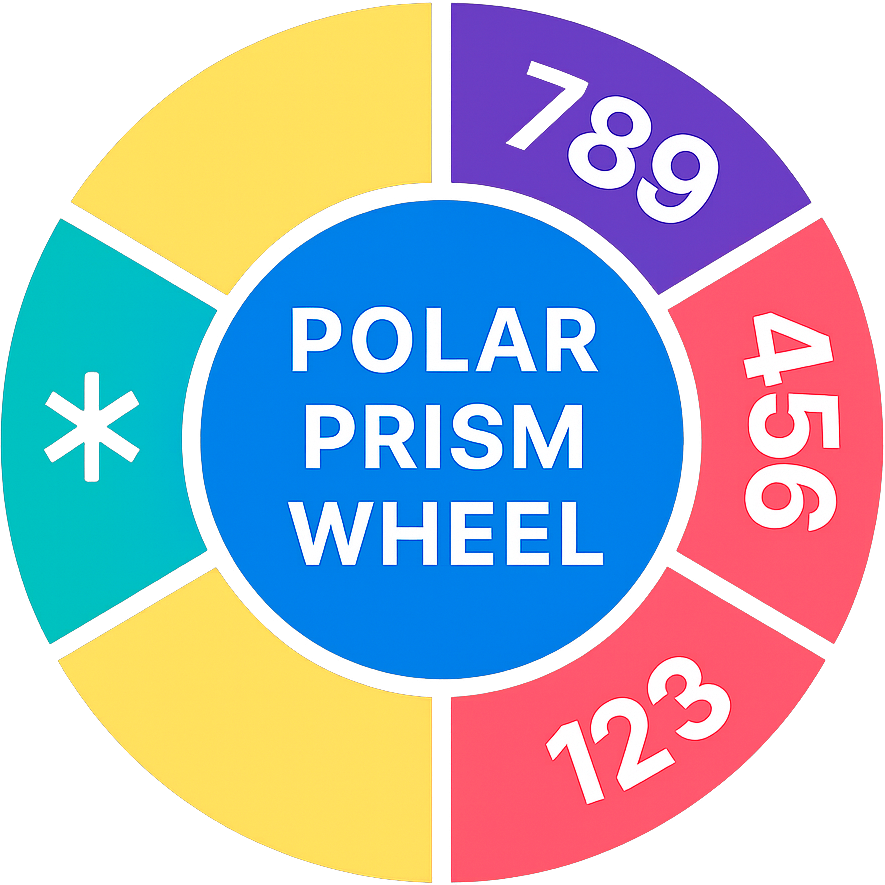
Aurora Prism Wheel

A segmented wheel where colours, symbols, or clusters map to outcomes.

Segments Colour bands Clusters

What it illustrates

Wheel formats typically present many labelled segments. The final pointer position determines the round result, and any “win condition” depends on how the operator defines segments, frequencies, and tiers.

How it might be defined (illustrative)

  • The wheel is split into visible labelled segments.
  • Rules explain what players select in advance (colour, symbol, or group).
  • The wheel spins and stops at one segment.
  • The outcome is decided by matching the selection to that final segment.

Common-sense notes

  • Look for segment counts and how often each type appears.
  • Understand the difference between colours, numbers, and special symbols.
  • Each spin is independent; prior spins don’t “set up” the next one.

Mini scenario

A wheel could contain 48 segments across several colour families. If you preselect a colour family and the pointer stops on it, the operator’s table might define a fixed prize for that match.

A sensible approach to prize-style formats

No matter the game structure, a calm, structured approach helps keep play within boundaries and prevents it from drifting into pressure or impulse.

1. Learn the rulebook

Read the operator’s official rules. Focus on how results are generated, what “matching” means, and how tiers are calculated.

2. Pick limits first

Choose a time limit and a spending cap (if you play at all). Treat it like a leisure budget, then stop when you reach it.

3. Keep expectations grounded

These formats are optional entertainment. They are not a plan for income and can’t fix financial problems.

4. Pause and check in

Take breaks. If play feels tense, urgent, or no longer fun, that’s a signal to step away.

FAQ

These answers are general information. For legally binding details, always consult official provincial resources and the operator of any real game.

Do you sell tickets, take bets, or run games?

No. This site doesn’t sell tickets, hold balances, or process payments. It’s a neutral explainer on how certain formats are commonly described and how responsible participation can look.

Who should use this website?

Adults (18+) in Canada who want a better understanding of terms and mechanics in number-draw and prize-style formats. If you’re under 18, please don’t use this site.

Are these games legal in Canada?

Rules vary by province and by format. Official operators publish eligibility, age limits, and terms. This site does not provide legal advice. For legal questions, rely on official provincial sources or a qualified professional.

How much time or money is “reasonable”?

There’s no single number that fits everyone. A practical benchmark is to treat play like any other optional entertainment and keep it small enough that essentials and savings are never affected.

What if play starts feeling hard to control?

If it’s difficult to stop, affects mood, finances, or relationships, or stops being enjoyable, take a full break and talk to someone you trust. Consider professional support services in your province as well.

Safer play and wellbeing

The goal is simple: keep participation informed and bounded. Prize-style formats are best treated as occasional leisure, never as a source of pressure.

Ground rules

  • Use only money you can comfortably lose.
  • Keep play occasional, not constant.
  • Set time and spend limits before starting.
  • Avoid playing when stressed, upset, or under the influence.
  • Don’t attempt to “win back” losses.

Signs it may be slipping

  • Spending more time or money than planned.
  • Feeling restless or irritable when not playing.
  • Keeping play secret from friends or family.
  • Using play to escape everyday problems.
  • Missing obligations because of play.

Helpful next steps

  • Take a full break from all prize-style games.
  • Review your budget and prioritize essentials.
  • Talk to a trusted person about what’s going on.
  • Replace play time with other activities (walks, hobbies, social time).
  • Reach out to a provincial helpline or professional support service.

Need extra support?

Every province and territory has services for people concerned about gambling or prize-style play. Many offer free, confidential phone lines, chat support, and counselling options.

If you or someone you know is in immediate danger or experiencing an emergency, contact local emergency services right away.